Which drinking cup do you need for your little one?
your guide to choosing the right cup for your baby or toddler
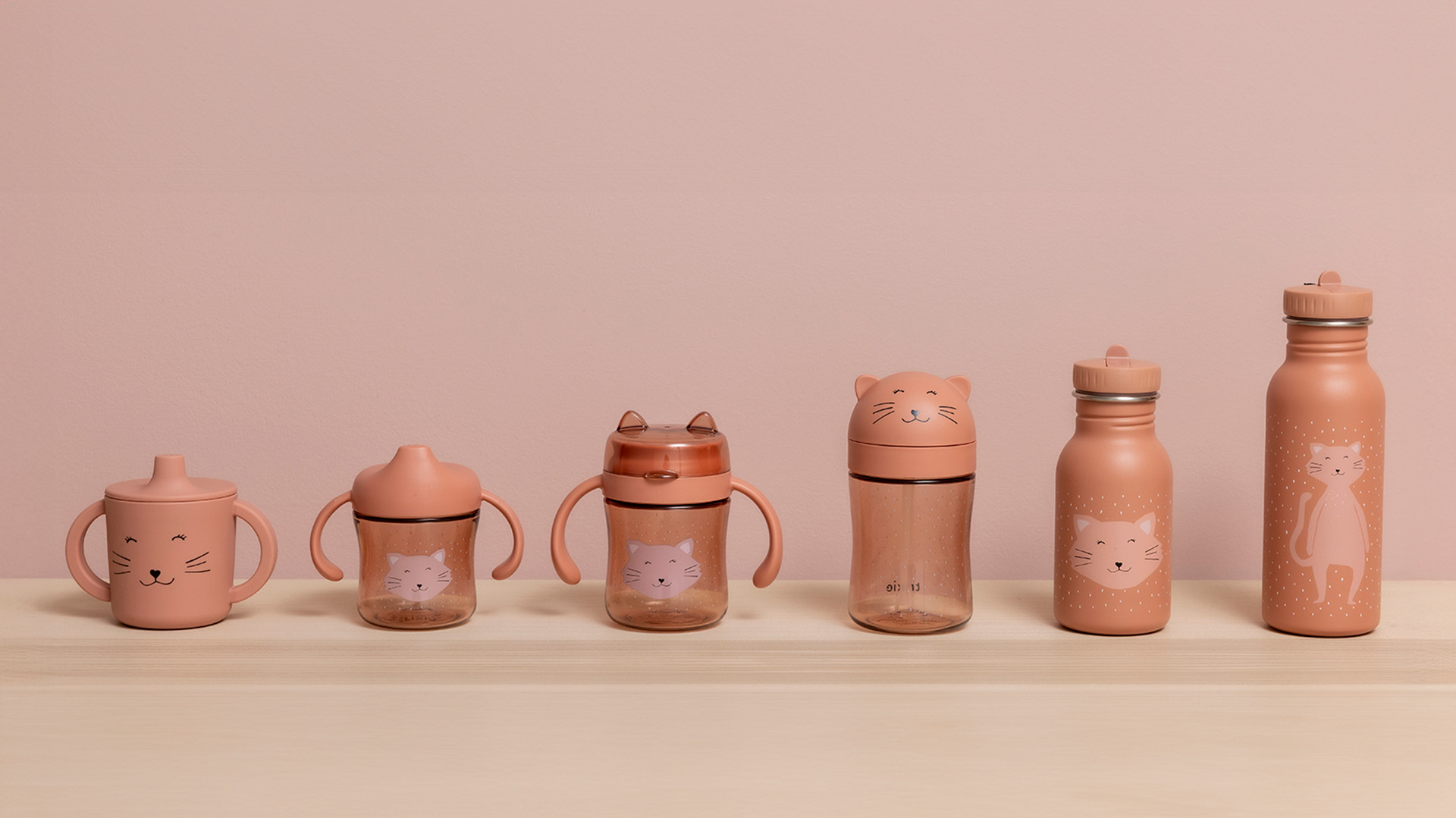
Choosing a drinking cup sounds simple… until you realise there are so many options. This guide helps you pick the right drinking cup for each age and stage, from those first little sips to big-kid school days.
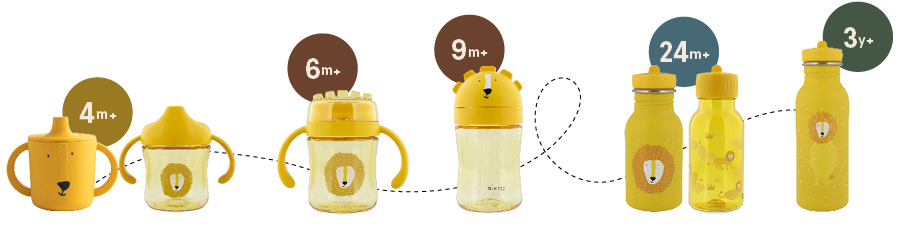
Quick answer: From around 4–6 months, babies can start with a sippy cup alongside solids. From 6 months, a 360° cup. From 9 months, a straw cup. From 2 years, a 350ml drinking bottle and 500ml from age 3. The right cup changes as your child grows, because each cup type supports different skills at different stages.
what learning to drink actually teaches
When your baby is learning to drink from a cup, they're not just learning to drink from a cup. They're building:
- fine motor skills: holding, tipping and controlling the flow
- hand-eye coordination: getting the rim to their mouth, over and over
- oral motor skills: lips sealing, tongue moving naturally, jaw getting stronger
- independence & confidence: the proud “I did it!” moment that leads to more confidence
- healthy habits: water breaks become second nature
Different cups support different skills at different stages. That's why age recommendations exist, not as strict rules, but as friendly guideposts for what your child is ready to explore next.
age-by-age drinking cup guide
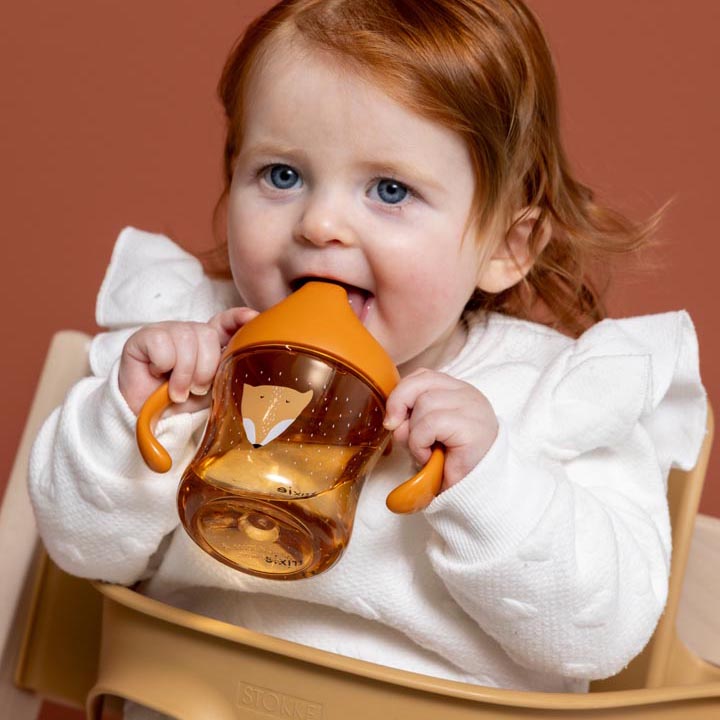
± 4-6 months: sippy cup
When babies start solids, many are ready to explore small sips of water too. A sippy cup with handles is a gentle first step because it feels familiar. Your baby already knows how to suck, and a spout helps bridge that gap as they learn to sip, tip and control the flow.
Materials tip: silicone feels extra soft for gums if your baby loves to chew, while Tritan™ is lightweight, clear and built for everyday tumbles.
best for: first cup practice • small water breaks • at the table
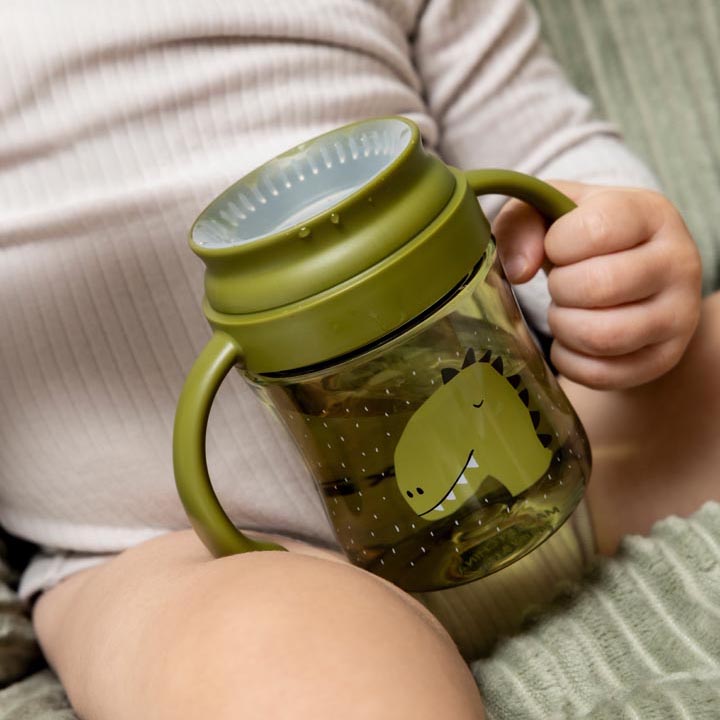
from 6 months: 360° cup
Around 6 months, many babies sit steadier, grip stronger and have serious "I want to do it myself" energy. A 360° cup is a brilliant fit for this stage because it mimics drinking from an open cup, but with far fewer spills. As they drink from the rim, they practise sealing their lips and controlling the flow with better coordination.
Choose a model with a cap if you want it to travel beyond the high chair.
best for: open-cup practice • fewer spills • at home or on the go
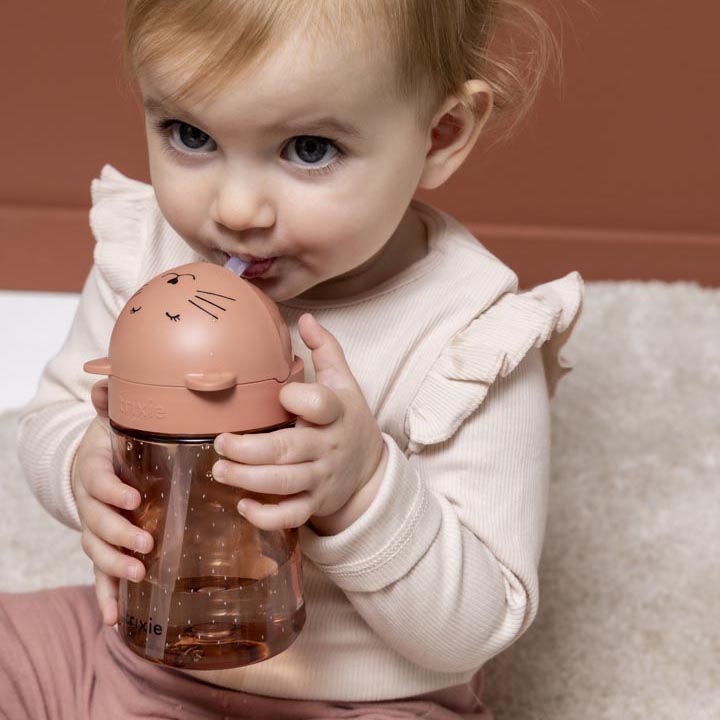
from 9 months: straw cup
From around 9 months, many babies are ready for a straw cup. Drinking through a straw strengthens the cheeks and tongue, supports speech development and improves swallowing. It’s a great preparation for open-cup drinking later on.
It's also wonderfully portable for life on the go: nursery runs, buggy walks, park adventures and everything in between.
best for: independent sipping • straw skills • at home or on the go
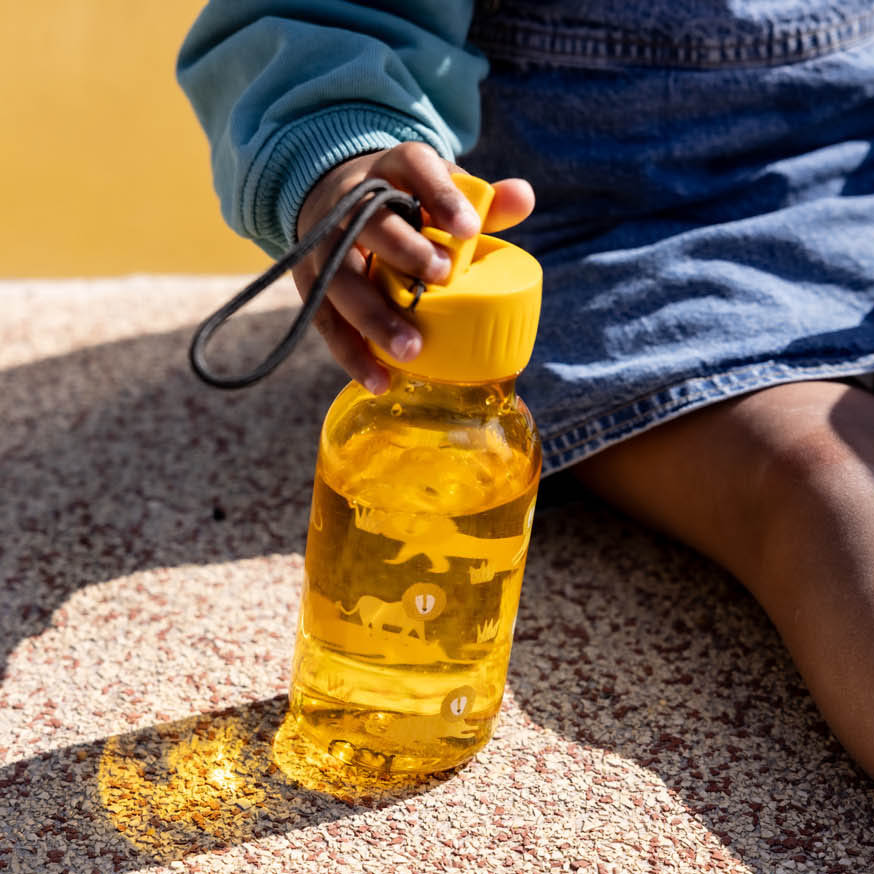
from 2 years: 350ml drinking bottle
By 2, most toddlers are confident drinkers and want to choose their favourite bottle to take along with them. The 350ml size is a sweet spot. It's enough for preschool and short outings, in a size that still fits little hands comfortably. Leak-proof and durable, it’s made for busy days.
best for: preschool • shorter outings • everyday adventures
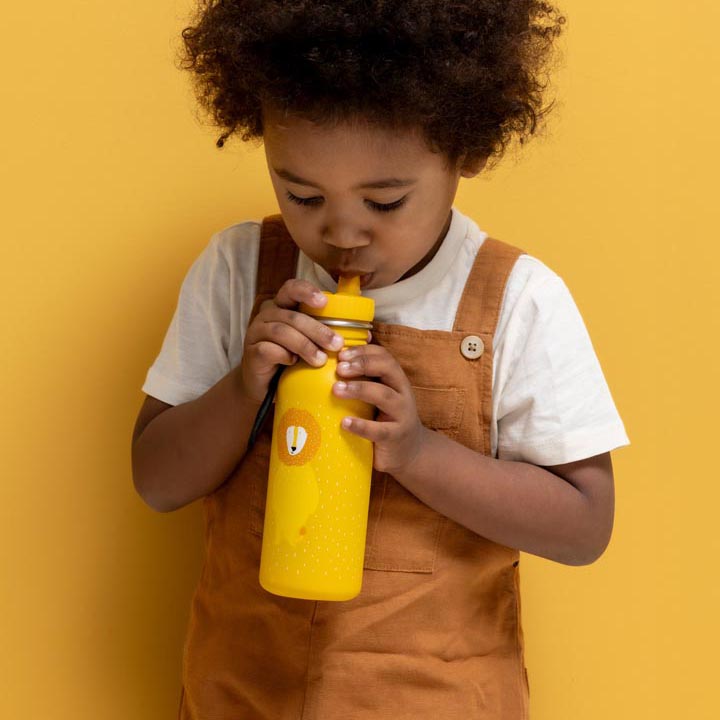
from 3 years: 500ml drinking bottle
By 3, your child is off on bigger adventures, and their cup should keep up. A 500ml bottle is the right companion for school days, outdoor play and everything in between. It's enough to keep them hydrated through the day without constant refills. And children learn to manage it themselves: filling it up, closing the lid, popping it in their bag.
best for: school • longer days out • bigger adventures
a trusted animal friend nearby
water breaks are simply more fun when an animal friend joins in
questions parents ask
Many babies can begin practising around 4-6 months, often alongside the introduction of solids. Start with small sips of water and keep it playful.
A sippy cup is a first practice cup that helps with first grips and first sips. A 360° cup feels closer to an open cup and supports a good lip seal but with less spills. A straw cup supports oral control and is great for on-the-go independence. Many families switch between them, depending on where you are and what you’re doing.
Most children transition away from a sippy cup between 12 and 18 months. Moving to a straw cup or an open cup helps support better oral development at this stage.
Start with a small amount of water. Tip the cup so water reaches the rim, touch it to their lips and let them copy. Repeat often. It usually clicks with practice.
A straw cup or a 360° cup is often the favourite for nursery. They’re practical, portable and easy for little ones to manage independently.
A drinking bottle with a spout is ideal for children aged 2 and up. It holds enough for a school day and is easy for children to manage on their own.
Check that the lid is fully closed and aligned, the straw or valve is seated correctly, and nothing is worn or cracked. Also check it isn't overfilled. Leaks happen. And yes, kids also enjoy testing gravity.
The 350ml is ideal from 2 years: great for nursery, shorter outings and smaller hands. The 500ml is better from 3 years onwards, when school days and bigger adventures call for more.
All Trixie cups and bottles are food-safe and BPA-compliant. We use Tritan™ for durability and clarity, and silicone for softness and flexibility.
In many cases, drinking cups can be placed in the dishwasher on the top rack. Take the cup apart (lid, straw/valve, any silicone pieces) and rinse with warm water first. Pop small parts into a cutlery basket or so they don’t disappear. When in doubt, check the care instructions for your specific cup.
ready to find the right cup?
Choose the cup that matches your little one's stage and daily routine, pick a favourite animal friend & let the adventure begin.